The CISO's 2026 Mandate: Quantifying the Irreversible Costs of Compliance Drift vs. the Measurable ROI of Continuous Controls Monitoring
Transforming cybersecurity from a static defense into a dynamic, ROI-driven architectural asset in the age of automated governance.
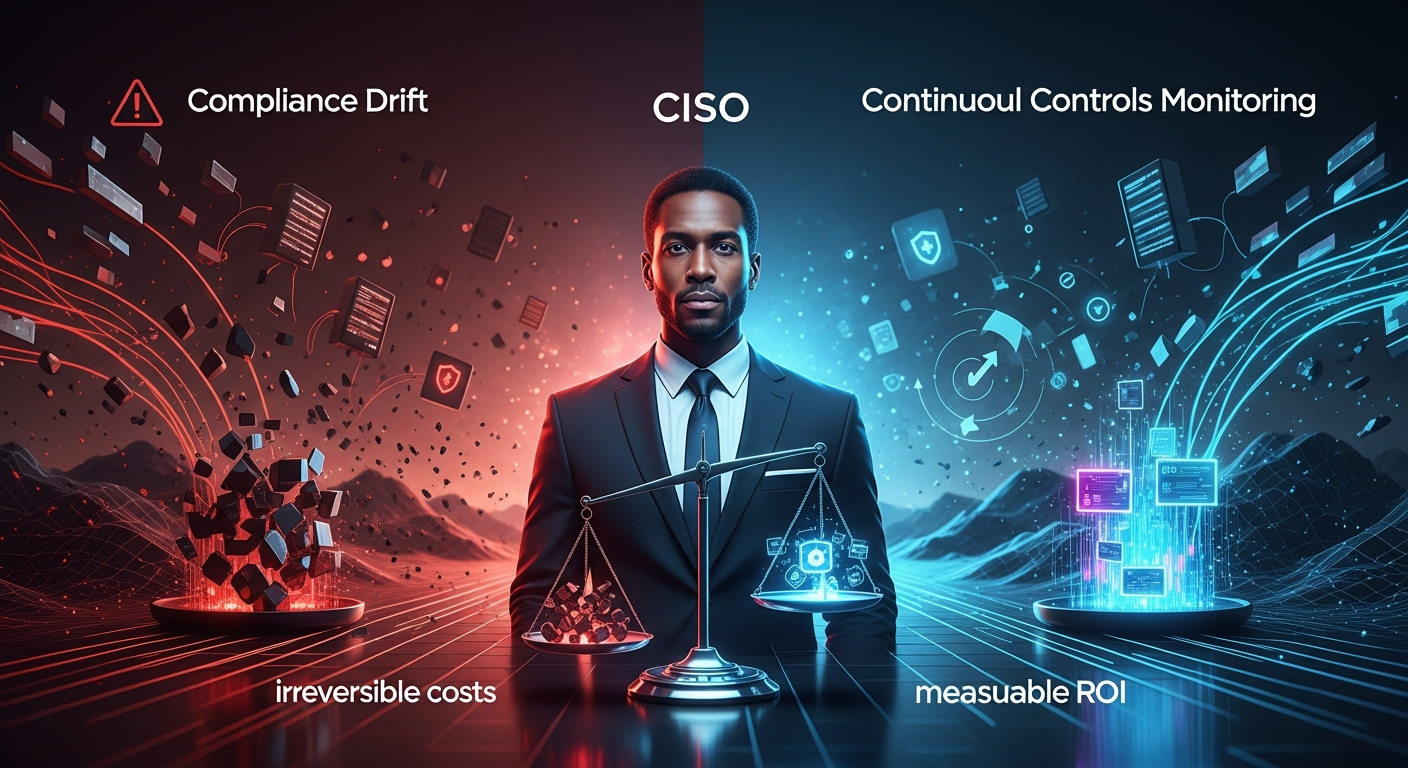
For Chief Information Security Officers (CISOs) navigating the intricate landscape of 2026, the question of unwavering compliance transcends mere policy adherence; it becomes a fundamental architectural challenge. The traditional model, characterized by periodic audits and manual controls, often creates a brittle security posture, akin to inspecting quality only at the end of a complex manufacturing line. Continuous Controls Monitoring (CCM) represents a paradigm shift, integrating security and compliance feedback loops directly into the operational fabric, thereby enabling a proactive, resilient defense against evolving threats and regulatory demands.
Why Continuous Controls Monitoring Matters Now for the Enterprise CISO
In the high-stakes environment of 2026, the question for CISOs is no longer if compliance will fail, but when – and at what cost – without a continuous controls monitoring (CCM) operating model. Organizations that continue to rely solely on periodic reviews risk compliance failures, operational inefficiencies, and reputational damage [Continuous audit readiness across frameworks in 2026 - TrustCloud].
The global enterprise governance, risk, and compliance (GRC) market size is valued at US$24.5 billion in 2026 and is projected to reach US$57.3 billion by 2033 [Statistics: US$24.5 billion], underscoring the growing recognition of this critical domain. Yet, for many Fortune 500 enterprises, the reality of compliance management remains reactive, prone to significant financial and operational burdens.
"The average cost of noncompliance has escalated to a staggering $14.82 million, representing a nearly three-fold increase over the cost of maintaining proactive compliance standards."
We recognize that the average cost of compliance for an enterprise is approximately $5.47 million. However, the true economic imperative for adopting CCM becomes starkly evident when juxtaposed with the average cost of noncompliance, which escalates to a staggering $14.82 million [America's Global Standards-Setting Withdrawal]. This underscores a critical architectural flaw: traditional strategies often perpetuate a cycle of delayed detection and costly remediation.
The Systemic Fragility of Periodic Compliance Architectures

Consider an organization operating at scale: without CCM, compliance processes frequently reside in siloed functions, leading to significant delays in identifying control drifts or misconfigurations. The inherent nature of manual, point-in-time assessments means that controls can degrade, policies can be misinterpreted, or configurations can diverge from their secure baseline for extended periods without detection.
A hypothetical scenario from Q4 2025 illustrates this fragility. A Fortune 500 company identified a critical misconfiguration in a cloud-native application that had remained undetected for weeks due to a quarterly audit cycle. The resulting breach, projected to cost upwards of $6 million, highlights the shortcomings of a fractured compliance architecture. Our focus must shift from reactive policing to proactive system design.
Continuous Controls Monitoring (CCM) as an Architectural Imperative
CCM represents a fundamental re-architecture of the compliance function, embedding continuous feedback and automated verification directly into every layer of the technology stack. It transforms compliance from a static, episodic burden into a dynamic, integrated, and continuous operational process.
"The time and cost required to get full visibility manually are prohibitively high. Automation is the only solution."
— Tejas Ranade, CPO of TrustCloud
CCM leverages automated data and analytics to continuously assess whether selected controls are operating as designed, surfacing exceptions quickly and efficiently [How Compliance Teams are Conducting Continuous Controls ...]. This proactive stance treats control deviations as critical operational defects requiring swift remediation.
Quantifying the ROI: Costs of Inaction vs. Measurable Benefits of Proactive CCM
The Escalating Costs of Inaction: Compliance Drift in 2026
- Direct Financial Penalties: Regulatory bodies (GDPR, HIPAA, SEC) are imposing increasingly stringent penalties. The gap between $5.47M (compliance) and $14.82M (non-compliance) is the primary risk indicator.
- Breach Response Costs: Delayed detection contributes to breach severity. CCM enables real-time detection, mitigating the rising financial and reputational risks.
- Resource Drain: Manual collection of evidence diverts highly skilled personnel from strategic initiatives, creating organizational drag.
- Multi-Cloud Complexities: 69% of organizations report difficulty in securing data across distributed infrastructures [Cloud Compliance Challenges 2026 - Cloudnosys].
The Measurable Benefits of Proactive CCM
Adopting a CCM operating model delivers significant, quantifiable returns:
- Reduced Cost of Non-Compliance: Proactive identification moves the enterprise from the $14.82M risk bucket toward standard operational expenditure.
- Continuous Audit Readiness: CCM technology restores explainability and control [Business Case for CCM Technology - Cincom Systems].
- Faster Incident Response: Organizations utilizing continuous monitoring report 60% faster incident response times compared to traditional approaches.
- Accelerated Business Agility: By embedding security into DevSecOps, CCM enables faster time-to-market for new products.
Deep Dive: The Economics of the 60% Faster Response Time
By shifting from manual "stop-and-check" audits to real-time streams, security teams identify anomalies in minutes rather than weeks. In the context of 2026 ransomware speeds, this difference isn't just an efficiency gain—it's the difference between a minor service interruption and total data loss.
Strategic Pillars for CCM Investment in 2026
Identity Management in Cloud Environments
Identity is the new perimeter. CCM offers the capability to continuously monitor access controls, detecting unauthorized attempts or privilege escalations in real-time across hybrid environments.
Leveraging AI and GenAI in Security Operations
As Dionisio Zumerle (VP Analyst, Gartner) advises, we must identify new threats from AI agentic applications while experimenting with GenAI for remediation. CCM, augmented by AI agents, can automate risk detection and predict potential control failures before they occur.
Implementing CCM: A Transformative Journey
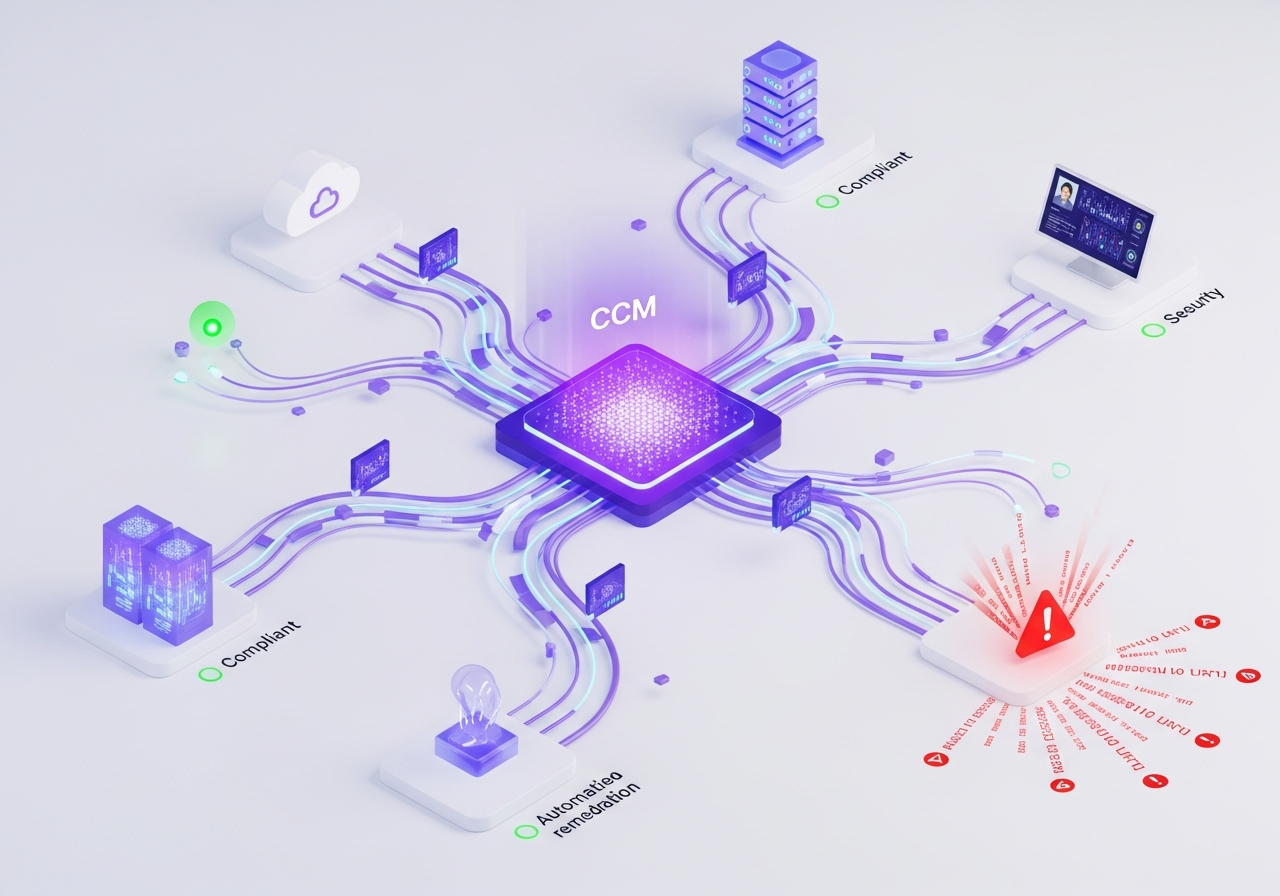
Successful adoption is not merely a technology deployment; it is a systemic process re-engineering. For large enterprises, this involves:
- Platform Consolidation: Integrating observability and security data into unified views. Solutions like Crest Data's Managed Datadog Services provide the expert consulting needed for high-value CCM insights.
- Automated Remediation: Using Managed SOAR platforms to trigger automated workflows when deviations occur.
- SRE Principles for Compliance: Treating compliance as a critical system requiring resilience engineering. Crest Data's Enterprise SRE Services help embed this reliability into the very fabric of platform design.
Conclusion
The adoption of Continuous Controls Monitoring in 2026 is an architectural imperative. By embedding continuous feedback into every layer of the technology stack, organizations transform security from a cost center into a competitive advantage. The irreversible costs of compliance drift demand this fundamental re-architecture, ensuring the enterprise remains resilient in an increasingly complex digital landscape.