How I Proved My Content's ROI to the Board: The 2026 RoGEO Playbook for 4.4x More Qualified Leads

Feeling the pressure to prove content ROI to the board in an AI-first world, while traditional SEO metrics continue to crumble? The RoGEO Playbook isn't just a strategy; it's a new conversation with your stakeholders—a blueprint for undeniable value.
- The 2026 landscape requires shifting from traditional SEO to RoGEO (Generative Engine Optimization) to secure budget and demonstrate business impact.
- The Playbook re-engineers strategy around multi-platform AI discoverability, focusing on ultra-long-tail queries and brand voice fidelity.
- Success is measured by brand presence in AI citations and referral traffic from agentic platforms, directly correlating content to pipeline growth.
- Scaling production through intelligent automation is essential to maintain visibility in generative engines and capture high-intent audiences.
Why This Matters
For the Head of Content Marketing at a B2B SaaS startup, the stakes have never been higher. You are tasked with driving organic traffic and proving content ROI, often with a lean team. The nagging fear that your content isn't generating enough leads or pipeline is real, threatening budget cuts and questioning your team's value.
For Visionary-Founder Victor, deeply immersed in product development and fundraising, consistent, high-quality content is the bedrock of thought leadership. The challenge isn't merely content creation; it's establishing a scalable, authoritative presence that fuels growth, freeing you to focus on the core mission.
Understanding why the old ways fail is crucial. The days of exact-match title tags are long behind us, as Dr. Pete Meyers, Lead Researcher at Moz, notes; the science of matching has continually improved [1]. The answer lies in a deliberate re-engineering of your content ecosystem designed for the realities of 2026.
The 2026 RoGEO Playbook: Redefining Content ROI

This isn't about simply generating more blog posts with AI. It's about engineering a system where every piece of content maps directly to a revenue outcome. We’re talking about an attribution model so clear that the C-suite doesn’t just approve your budget—they champion it.
The 2026 SEO landscape has undergone a fundamental shift from exact-match keyword targeting to intent-based matching and ultra-long-tail optimization [2]. As SEO evolves into a brand channel, the traditional reliance on simple rankings is being replaced by tracking brand presence within "citations" and AI-generated responses [3].
What is the RoGEO Playbook, and Why Is It Essential for 2026?
The RoGEO Playbook (Generative Engine Optimization) is a comprehensive framework for content strategy in an AI-first world. It recognizes that search is no longer a Google-centric monopoly; major activity is happening on platforms like ChatGPT and other agentic systems. The playbook prioritizes referral traffic from AI agents and LLM citations over legacy SERP positions.
Pillar 1: Agentic Discoverability & Ultra-Long-Tail Capture
In 2026, the industry is scrambling to adapt to a reality where ultra-long-tail is the new normal [2]. Rather than chasing single, competitive head terms, we shift focus to answering the nuanced, complex questions that AI agents parse. Our goal is to be the definitive, cited source within AI-generated responses.
Pillar 2: Brand Voice Fidelity & AI Trust Signals
Generic content stopped working years ago [4]. AI systems evaluate your entire site, brand reputation, and consistency. The RoGEO Playbook emphasizes leveraging AI to amplify your unique voice, ensuring that every piece of automated content sounds authentically you, building undeniable authority.
Pillar 3: Automated Content Velocity & Repurposing for Impact
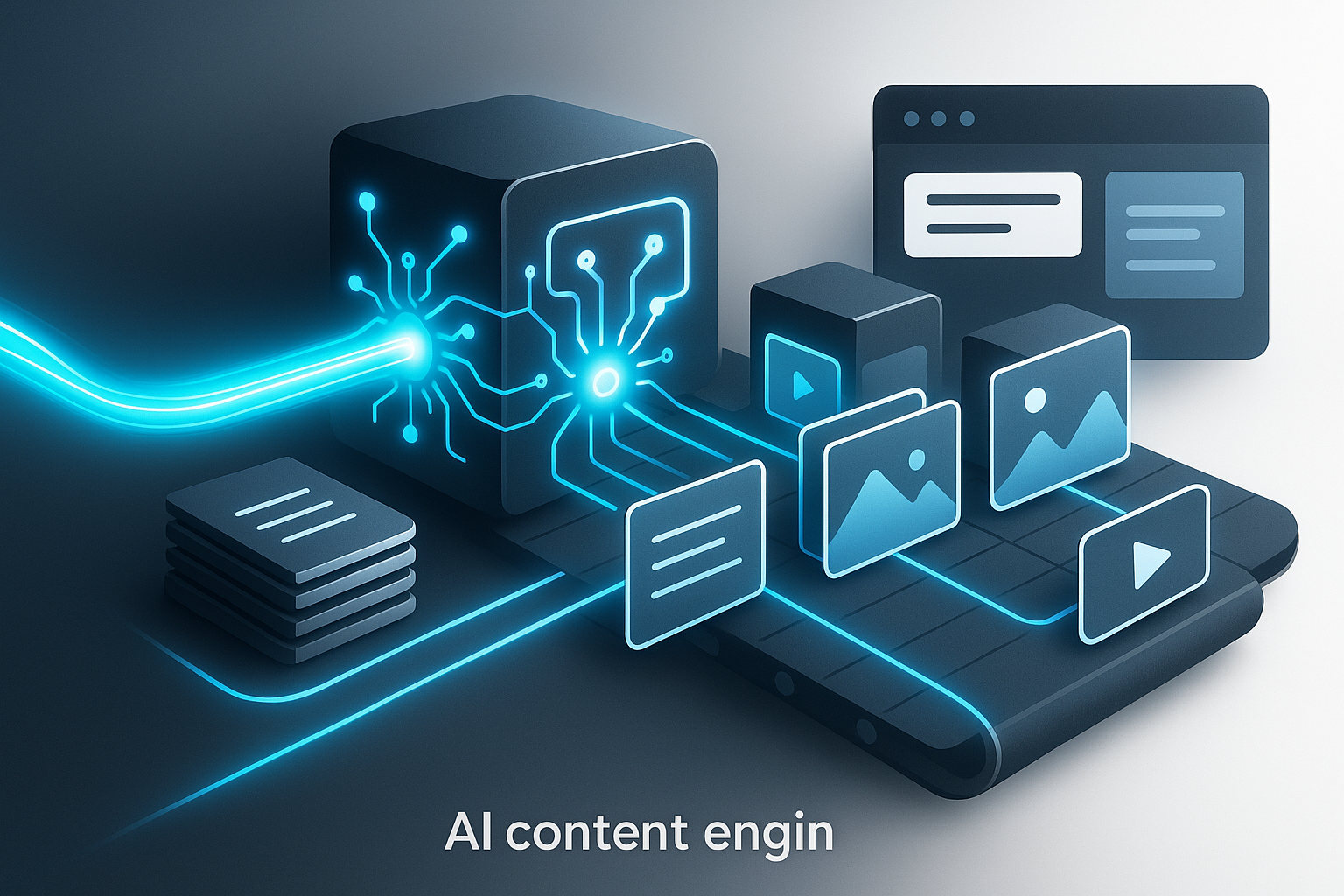
B2B SaaS companies are facing a production gap. Data from 2026 shows that firms using specialized agencies produced 67% more case studies than those writing them in-house [5]. The RoGEO Playbook champions an end-to-end AI content engine that automatically generates high-quality, SEO-optimized articles and instantly repurposes them for LinkedIn, ensuring consistent output across channels.
Pillar 4: Redefining "Lead": Measuring Qualified Engagement
"If you find yourself talking about 'ranking' in 'citations' for 'head term prompts', something has gone wrong," states STAT Search Analytics [3].
Proving ROI means directly correlating engagement with sales-qualified leads. We track user journeys originating from AI citations and attribute pipeline contribution directly to specific content clusters. We're not just looking for traffic; we're looking for intent.
| Metric Shift (2026 RoGEO) | Old Metric (Pre-2026) | Significance |
|---|---|---|
| AI Citation Rate | Keyword Rank | Measures visibility within generative AI responses. |
| Referral Traffic from AI Agents | Organic Search Clicks | Direct attribution of leads from agentic platforms. |
| Brand Voice Consistency Score | Content Volume | Assesses fidelity in AI-generated content. |
| Qualified Lead Gen per Cluster | Bounce Rate | Focus on pipeline, not superficial engagement. |
Expert Insight: The Agentic Future and Your Role
"Agentic is 2026's chief buzzword. But what does it mean, not just for SEO, but for people?" asks Matt Jones, an SEO Strategist [6]. Agentic systems are moving beyond traditional search queries to complex, multi-turn interactions.
Our role as content leaders is about designing information architectures that speak to these new intelligent entities. The RoGEO Playbook acts as an operating system for this reality, ensuring your content is discoverable, trustworthy, and impactful.
How does the RoGEO Playbook adapt to multi-platform AI search?
The RoGEO Playbook reorients strategy from a Google-centric view to a multi-platform approach. We focus on creating topically authoritative content that is easily digestible and citable by LLMs. This involves structuring content with clear headings and summaries to ensure it appears in AI-generated answers across diverse agentic systems.
What are the technical risks of AI content generation, and how can we mitigate them?
Risks include inaccuracies and generic output. We mitigate this through brand voice extraction and mandatory human oversight. Advanced AI models are trained on your specific voice, and crucially, nothing posts without your approval. This blend of automation and human editorial control ensures content is high-quality and consistently on-brand.
How can B2B SaaS companies scale content production to feed generative engines effectively?
Most teams have a system problem, not a content problem. The Playbook advocates for an end-to-end AI content engine that automates topic intelligence, SEO-optimized generation, and instant social repurposing. This allows companies to produce a consistent volume of high-quality content without overwhelming internal resources.
Conclusion
The choice is yours: remain a cost center, or become an undeniable revenue engine. The 2026 RoGEO Playbook offers the path. It’s not an easy journey, but the impact—4.4x more qualified leads—is the ultimate proof.
By embracing agentic discoverability and redefining how we measure engagement, we transform the content function. This is how you secure your budget and position your organization as a leader in an AI-first world.
References
- Moz Research. (2026). Keyword Research in 2026: Ultra-Long-Tail as New Normal. LinkedIn.
- Capper, T. H. (2026). The Shift to Intent-Based Matching. LinkedIn.
- STAT Search Analytics. (2026). Cited in SEO Metrics Evolution.
- Rank and Rent Empires. (2026). SEO challenges in 2026 explained. Facebook.
- Position Digital. (2026). 30+ SaaS Marketing Statistics & Trends for 2026.
- Jones, M. (2026). Understanding Agentic Search. LinkedIn.